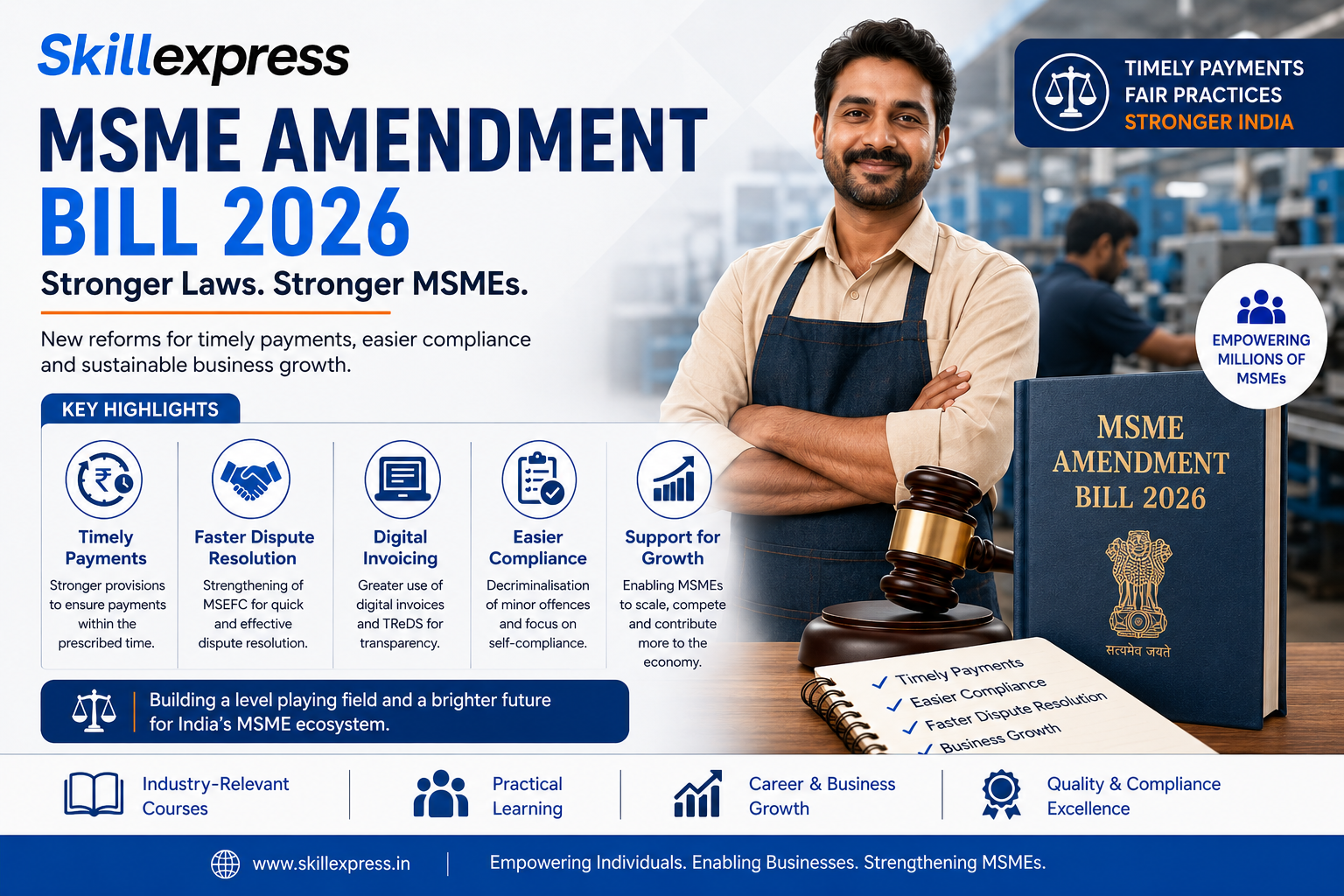
India’s Micro, Small and Medium Enterprises (MSMEs) are entering a new phase of growth, formalisation and digital transformation. With delayed payments, working-capital constraints and regulatory compliance continuing to affect businesses, recent policy measures are focused on creating a stronger and more efficient MSME ecosystem.
The MSME Amendment Bill 2026 is an important development in this direction. The reforms aim to strengthen payment mechanisms, improve dispute resolution, reduce compliance challenges and create a more supportive environment for MSME growth.
For entrepreneurs, suppliers, service providers and businesses working with government and large corporate buyers, understanding these changes is becoming increasingly important.
The MSME Amendment Bill 2026 seeks to amend the Micro, Small and Medium Enterprises Development Act, 2006 (MSMED Act) and strengthen the framework governing MSMEs in India.
One of the major areas of focus is the long-standing issue of delayed payments to Micro and Small Enterprises.
Delayed payments can create serious cash-flow challenges for smaller businesses. Even when an MSME has successfully completed a project or delivered products, waiting for payment can affect salaries, vendor payments, inventory purchases and business expansion.
The latest reforms are intended to make the MSME ecosystem more transparent, digitally enabled and business-friendly.
For a large company, a delayed invoice may be an accounting issue. For an MSME, it can become a working-capital crisis.
Consider a small business that completes a ₹10 lakh project. If the payment is delayed for several months, the company may still have to pay:
This is why timely payment is critical for MSME sustainability.
The Government has also taken a significant step through TReDS, with Central Public Sector Enterprises required to route settlement of invoices for goods and services procured from MSMEs through RBI-authorised TReDS platforms. This is intended to improve transparency and facilitate faster access to invoice financing.
Payment delays have historically been one of the biggest challenges faced by MSMEs.
The reforms strengthen the framework around payment obligations and dispute resolution, helping create greater accountability between MSME suppliers and buyers.
For MSMEs, this can mean better receivables management and improved working-capital planning.
When an MSME does not receive payment on time, prolonged disputes can further increase financial pressure.
The amendment framework focuses on improving the effectiveness and timelines of mechanisms available for resolving payment-related disputes.
This is particularly important for smaller businesses that may not have the resources to pursue lengthy legal proceedings.
Trade Receivables Discounting System (TReDS) is becoming increasingly important in the MSME payment ecosystem.
TReDS enables eligible MSME invoices to be financed by banks and other financial institutions, allowing businesses to potentially receive funds earlier instead of waiting until the buyer's payment date.
The Government's June 2026 notification requiring operating CPSEs to route MSME procurement invoice settlements through TReDS represents a major step towards strengthening this ecosystem.
Formalisation is another important part of India's MSME development strategy.
Maintaining valid business registration and accurate digital records can help enterprises access:
For a growing business, formalisation is not simply a compliance requirement—it can become a foundation for expansion.
The broader policy direction is towards reducing unnecessary regulatory friction and making it easier for businesses to operate and grow.
For MSMEs, this means that compliance processes, documentation, digital records and payment systems are becoming increasingly important components of day-to-day business management.
The policy changes provide MSMEs with an opportunity to strengthen their internal systems.
Ensure that your Udyam registration and enterprise information are accurate and updated.
Keep purchase orders, agreements, invoices, delivery challans, work-completion certificates and payment correspondence properly organised.
Create a systematic receivables tracker instead of depending only on email follow-ups.
Eligible MSMEs should understand whether TReDS and other digital financing mechanisms can support their working-capital requirements.
Payment timelines, deliverables, acceptance procedures, penalties and dispute-resolution clauses should be clearly defined.
Businesses should regularly review their statutory, contractual, financial and operational compliance requirements.
While payment reforms are important, sustainable MSME growth also depends on quality, productivity, technology, skills and operational excellence.
A business that receives payments on time but lacks quality systems may still struggle to compete in larger markets.
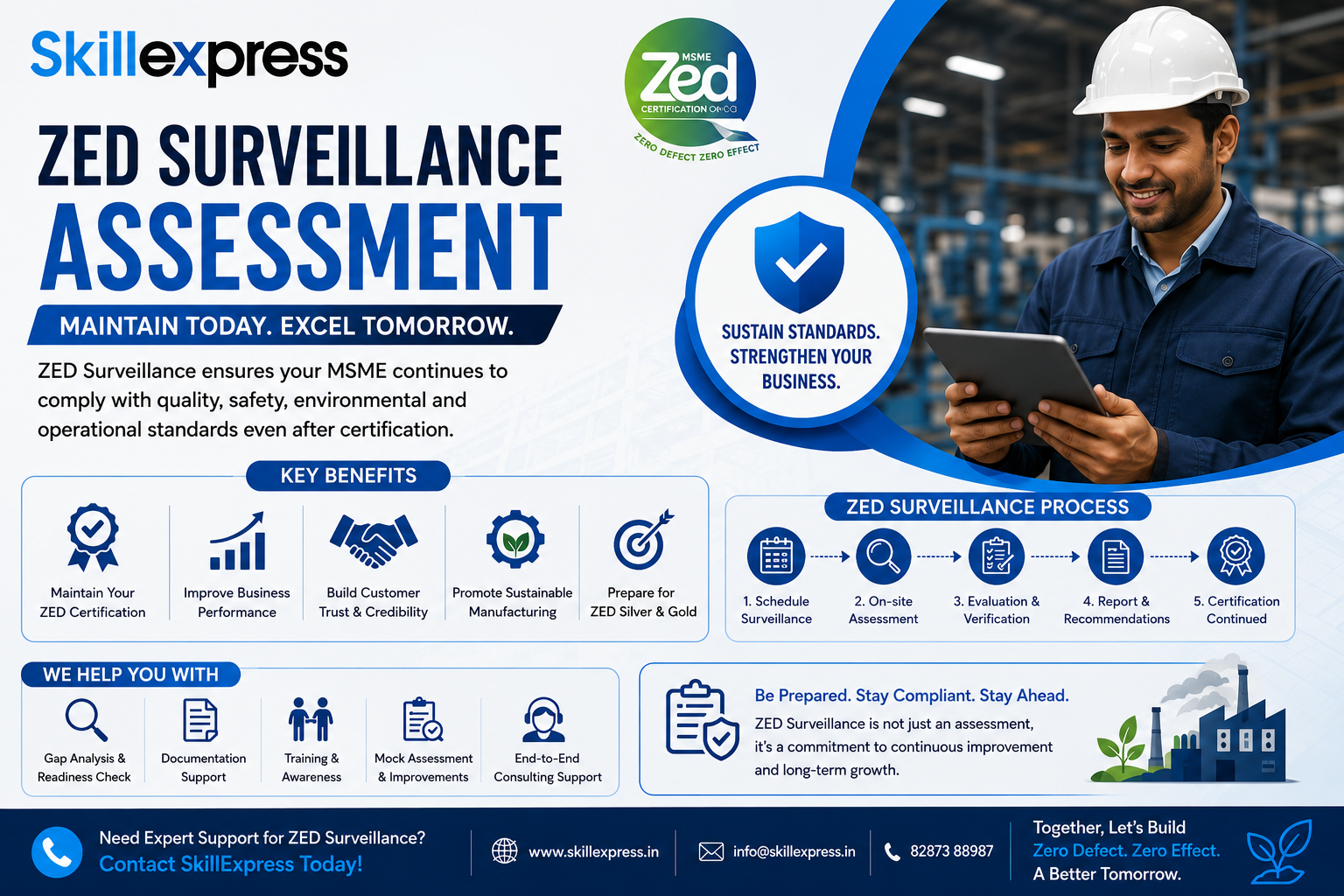
This is where structured programmes such as Zero Defect Zero Effect (ZED) can become relevant.
SkillExpress supports MSMEs under the MSME ZED Certification ecosystem, including assistance related to Bronze, Silver and Gold certification, documentation, compliance guidance and certification facilitation.
Quality-focused initiatives can help MSMEs strengthen processes, improve productivity, build customer confidence and become more competitive.
The future MSME ecosystem is increasingly moving towards three interconnected priorities:
Compliance + Quality + Digitalisation
Compliance helps businesses operate systematically.
Quality helps businesses improve products, services and processes.
Digitalisation helps businesses improve transparency, monitoring and access to financial and market opportunities.
Together, these areas can help MSMEs move from being small suppliers to becoming competitive and scalable businesses.
The evolving MSME framework can provide several potential advantages:
However, businesses should remember that regulatory changes alone cannot guarantee faster growth. MSMEs must also strengthen their financial, operational and quality-management practices.
Every MSME can use the following checklist:
✓ Verify Udyam registration details
✓ Maintain updated business and financial records
✓ Issue accurate invoices
✓ Record purchase orders and work completion
✓ Monitor outstanding receivables
✓ Review payment terms with clients
✓ Maintain digital documentation
✓ Explore TReDS eligibility where applicable
✓ Strengthen compliance systems
✓ Evaluate quality improvement and ZED certification opportunities
✓ Invest in employee skills and digital capabilities
India's MSME sector is moving towards a more formal, technology-enabled and quality-driven business environment.
The MSME Amendment Bill 2026, together with initiatives such as TReDS and ZED, reflects a broader shift towards helping enterprises improve financial discipline, operational efficiency, quality and competitiveness.
For MSMEs, the message is clear:
Growth is no longer only about getting more orders. It is about building a business that can deliver quality, maintain compliance, manage cash flow and compete at scale.
The MSME Amendment Bill 2026 is an important development for India's small-business ecosystem. With greater emphasis on timely payments, digital processes, dispute resolution and ease of doing business, the reforms can help address some of the challenges faced by MSMEs.
At the same time, entrepreneurs should take proactive steps to strengthen documentation, payment tracking, compliance, quality systems and workforce capabilities.
For MSMEs looking to become more competitive, 2026 can be an opportunity not just to comply with changing regulations, but to build stronger and more scalable businesses.


Explore endless possibilities with our expertise. Let us bring your vision to life with innovative solutions and seamless execution, tailored to meet your unique goals.